Connected Communities
A Community-Driven Vision To Strengthen The Communities Of The Lost Sierra Region
The Connected Communities vision started coming to life five years ago when SBTS executive director Greg Williams proposed it as a “moonshot” idea to provide a boost to rural communities whose resource extraction economies had largely dried up: What if trails and recreation could replace those boom-and-bust economies and bring in a steadier source of revenue and visitors?
The Sierra Nevada Conservancy funded the initial planning, the culmination of which is the newly published Trails Master Plan (see below under The Connected Communities Vision Overview). With initial planning completed, the vision is now moving forward through various phases including environmental review and development, while fundraising remains a key initiative to ensure continued progress on the envisioned 500+-mile long Lost Sierra Route.
It connects people to the outdoors and to each other. By linking towns with world class trails, it creates easier access to nature, healthier lifestyles and stronger local pride. Connected Communities also provides hope for communities that have been hard hit with job loss and catastrophic wildfires by offering a path toward recovery, resilience and new opportunity.
Connected Communities is the people’s plan. It took five years to develop through hundreds of meetings, surveys and mapping exercises led by local residents, business owners and trail users. This is not a government plan. It is a community driven vision shaped by the people who live, work and play in these towns. It brings new energy to main streets, creates jobs, supports small businesses and gives locals and visitors more ways to explore and enjoy the Lost Sierra.
Explore the page below to find how you can recreate now on this land, how you can get involved in Connected Communities, more on the economic benefits, as well as the SBTS’ Recipe Book and Best Management Practices for developing a similar plan in your community.
“Connected Communities ... could invigorate every community across the landscape. In wildfire-scorched places, people are realizing that trails are not just tools for recreation. They can be bridges between remote towns in rural places”
— SF Gate
How Recreation Connects Communities
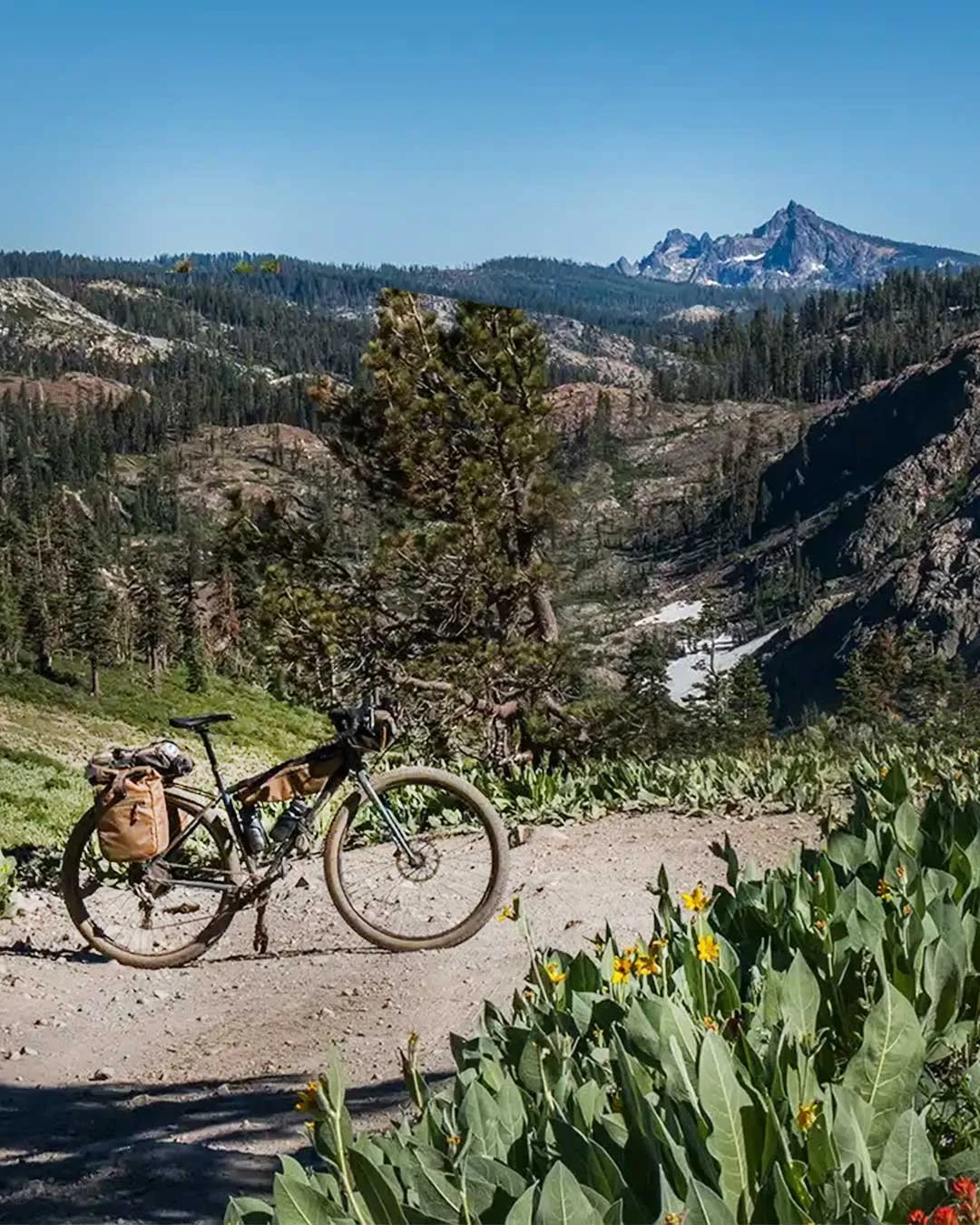
Bikepacking
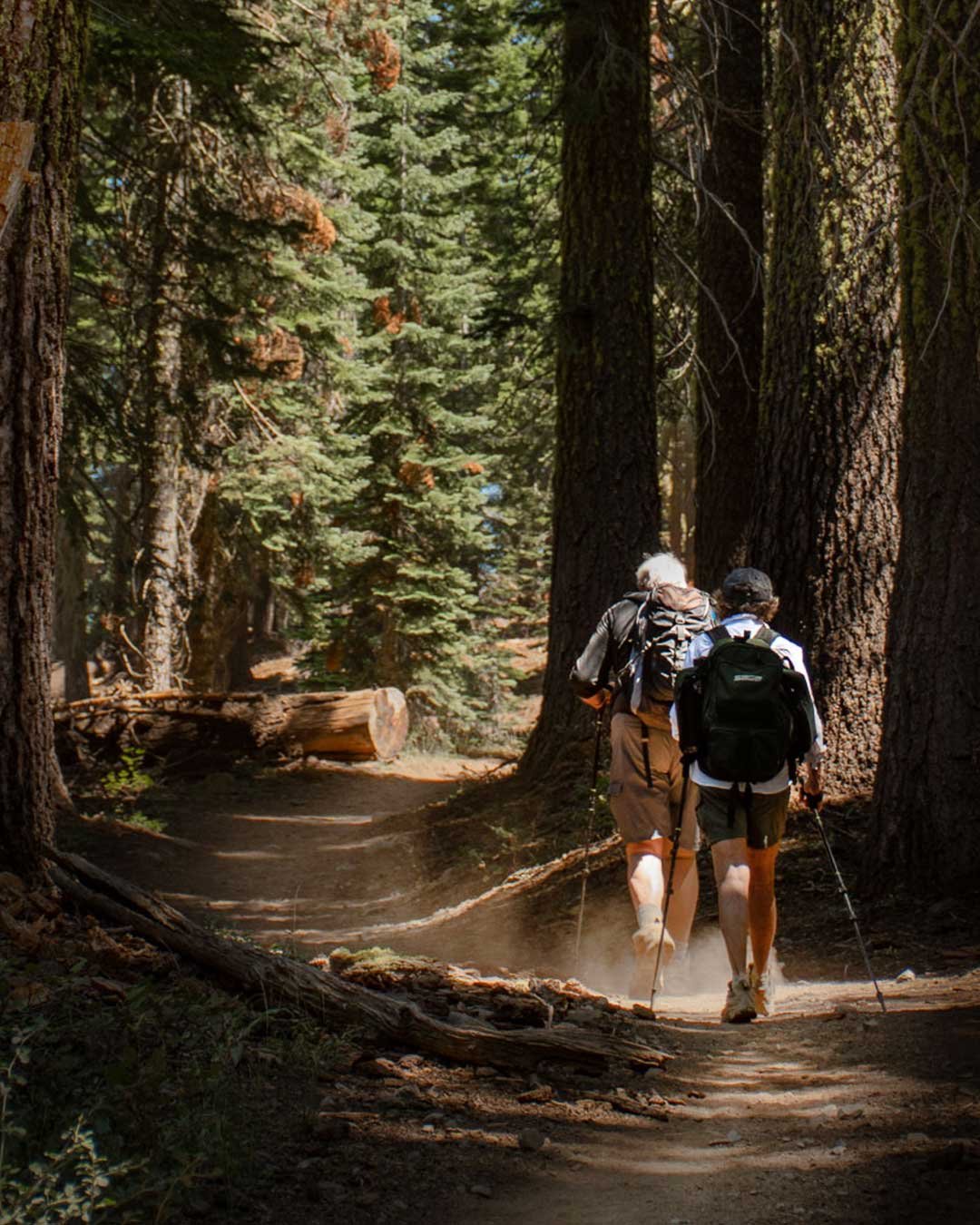
Backpacking
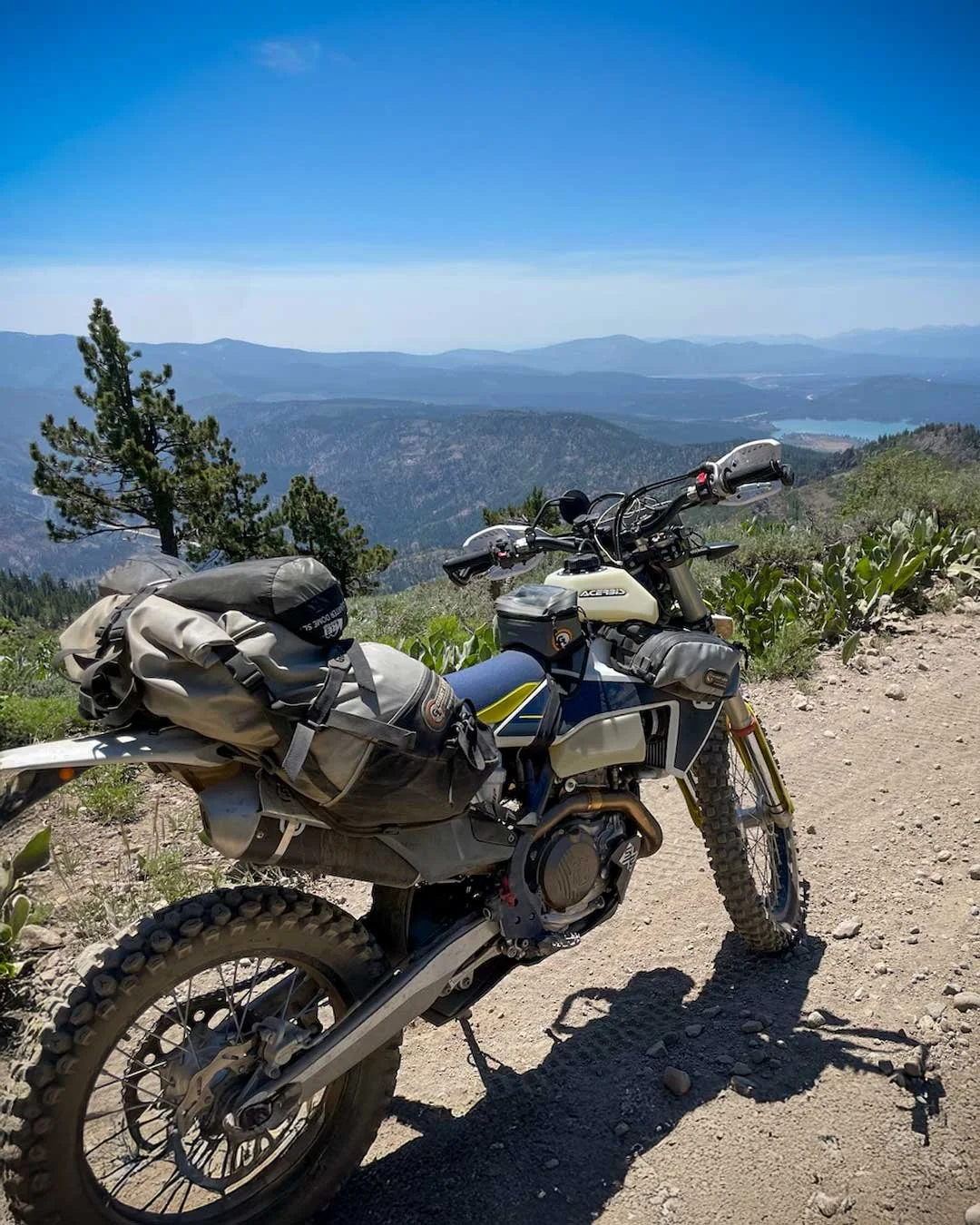
Motopacking
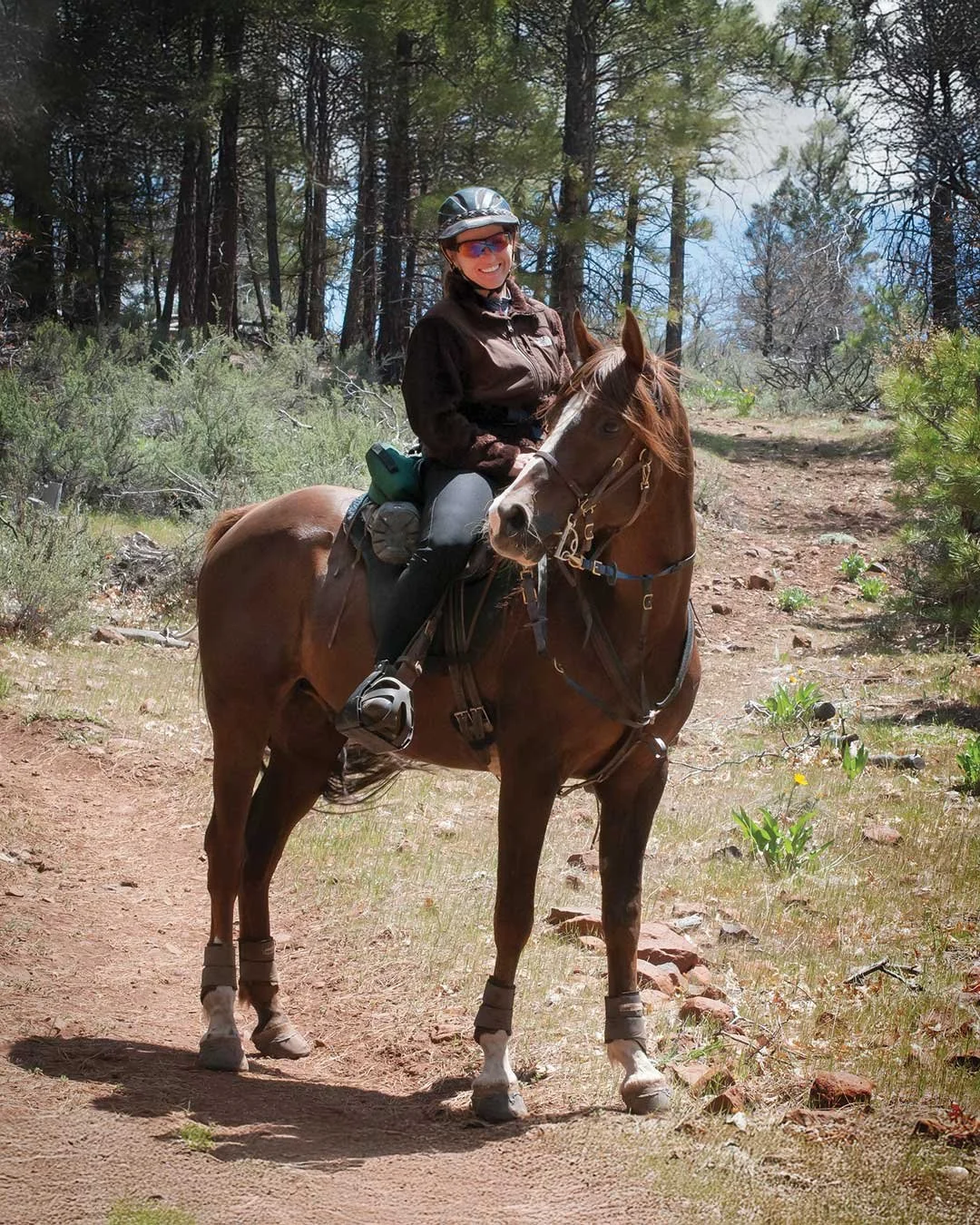
Horsepacking
The Connected Communities Vision Overview
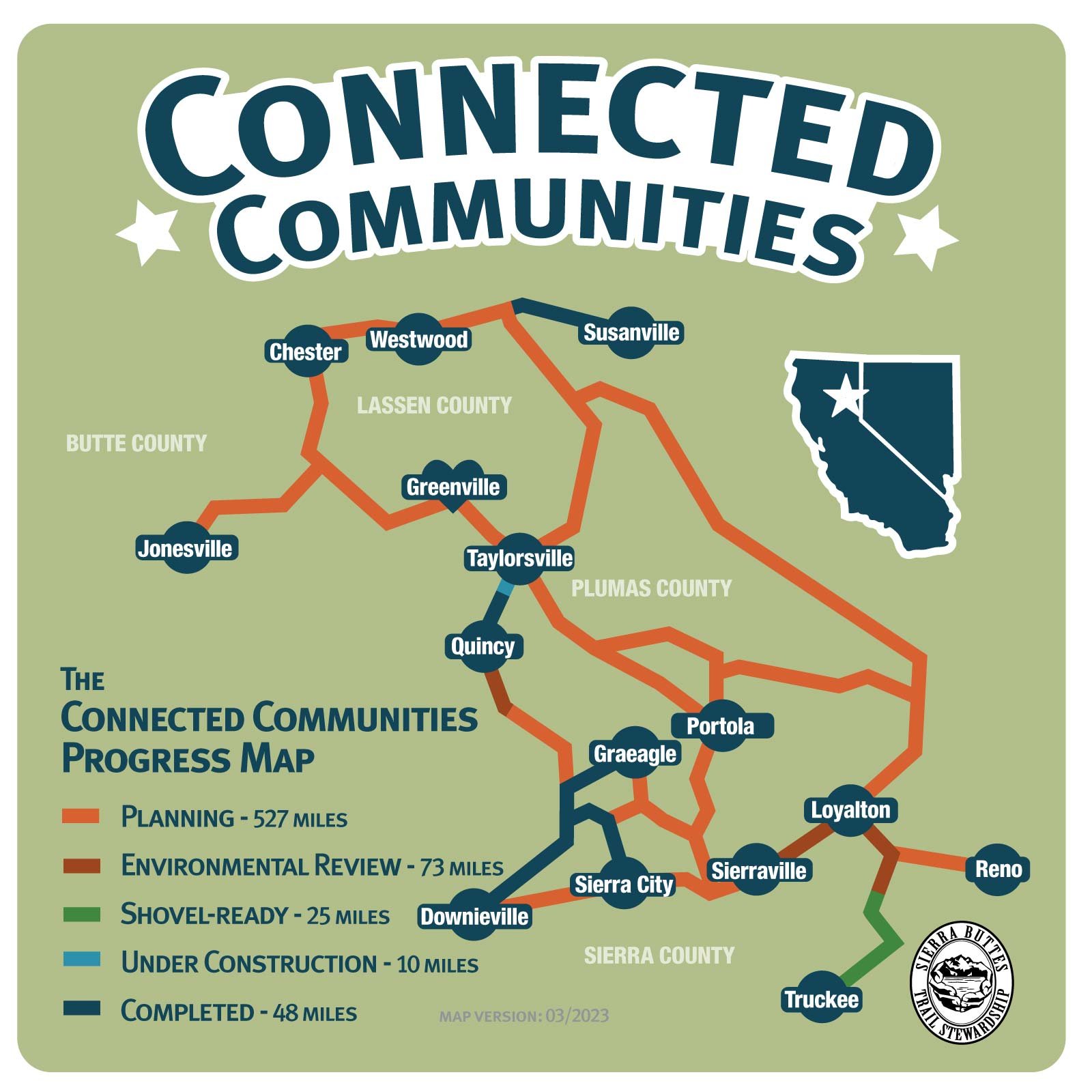
The Connected Communities Vision includes four main components:
The Connected Communities Project includes four main components:
Identify ideal trail corridors for a singletrack trail network to connect communities across the region and outline a signature route through the region dubbed the Lost Sierra Route
Conceptualize capital improvement projects required to support the trail network such as trailhead infrastructure
Highlight Recreation Zones as areas near communities that warrant additional planning and development
Develop desired conditions for fuels reduction and restoration within future project planning areas
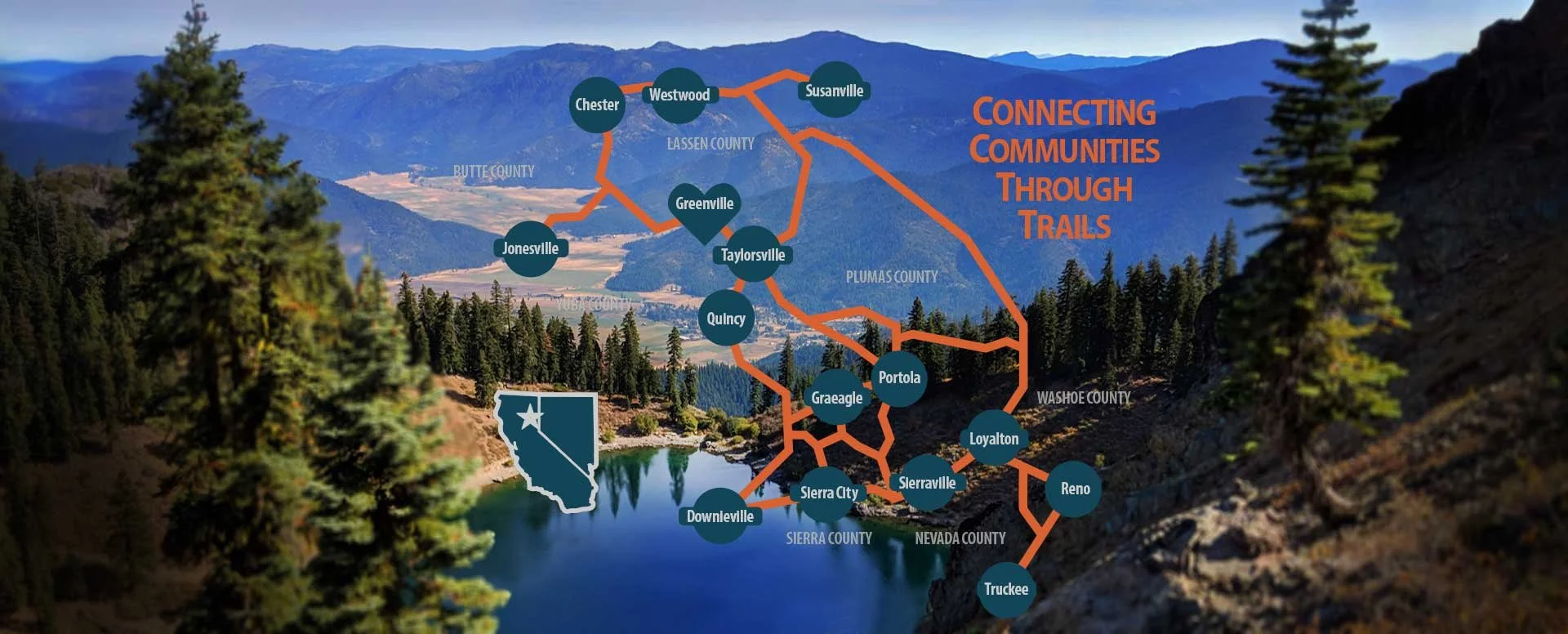
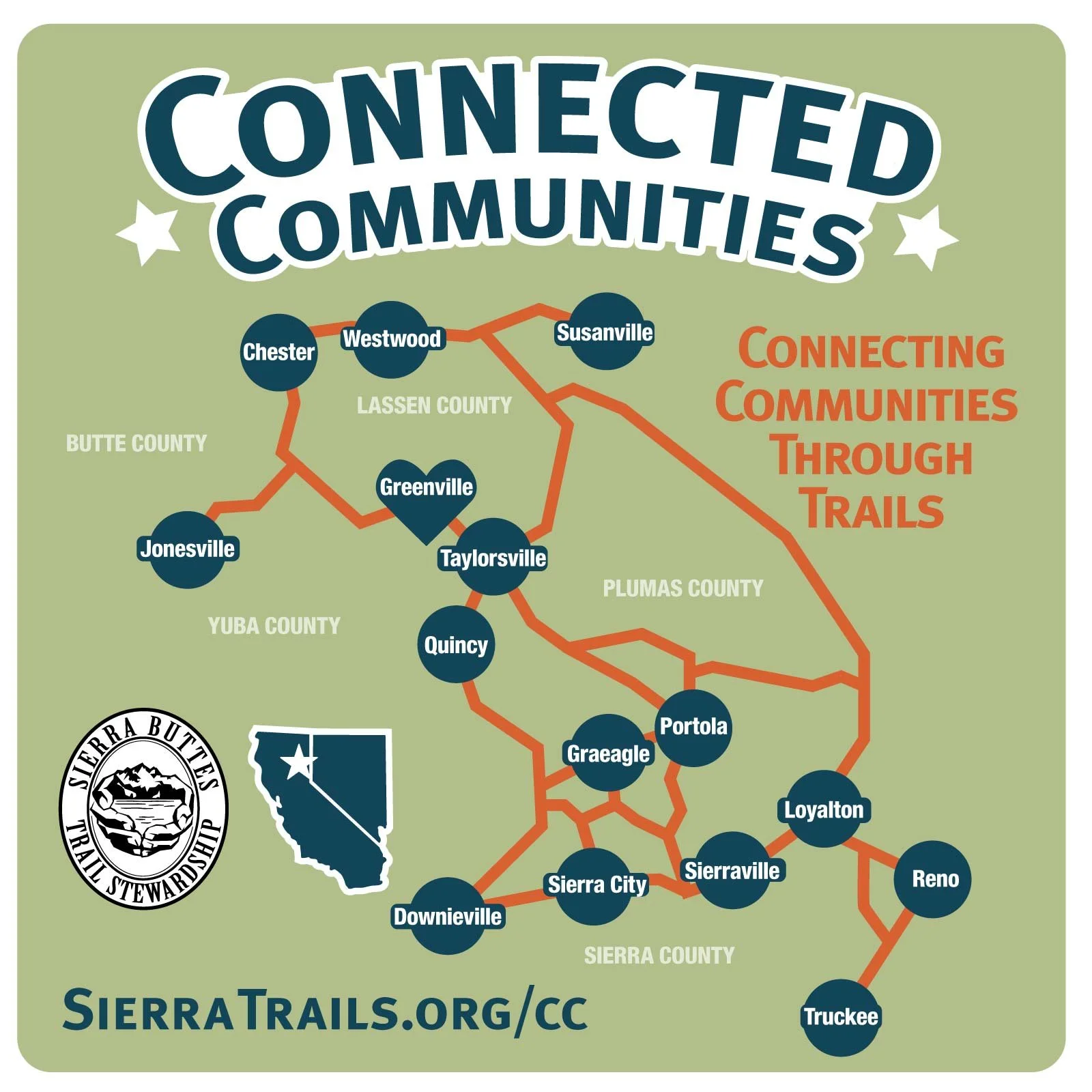
The Connected Communities area is located in northern California and western Nevada spanning:
The ancestral homeland to many indigenous peoples, including Miwok, Maidu, Washoe, Nisenan, Konkow, Pit River and Paiute.
6 Counties: Plumas, Sierra, Lassen, Butte, Nevada and Washoe
15 Towns: Johnsville, Susanville, Westwood, Chester, Jonesville, Greenville, Taylorsville, Quincy, Graeagle, Portola, Loyalton, Sierraville, Sierra City, Downieville, Truckee, and Reno
5 Federal Land Agencies: Lassen, Plumas, Sierra, Humboldt-Toiyabe National Forests and Bureau of Land Management
The Connected Communities Project can be broken into four phases:
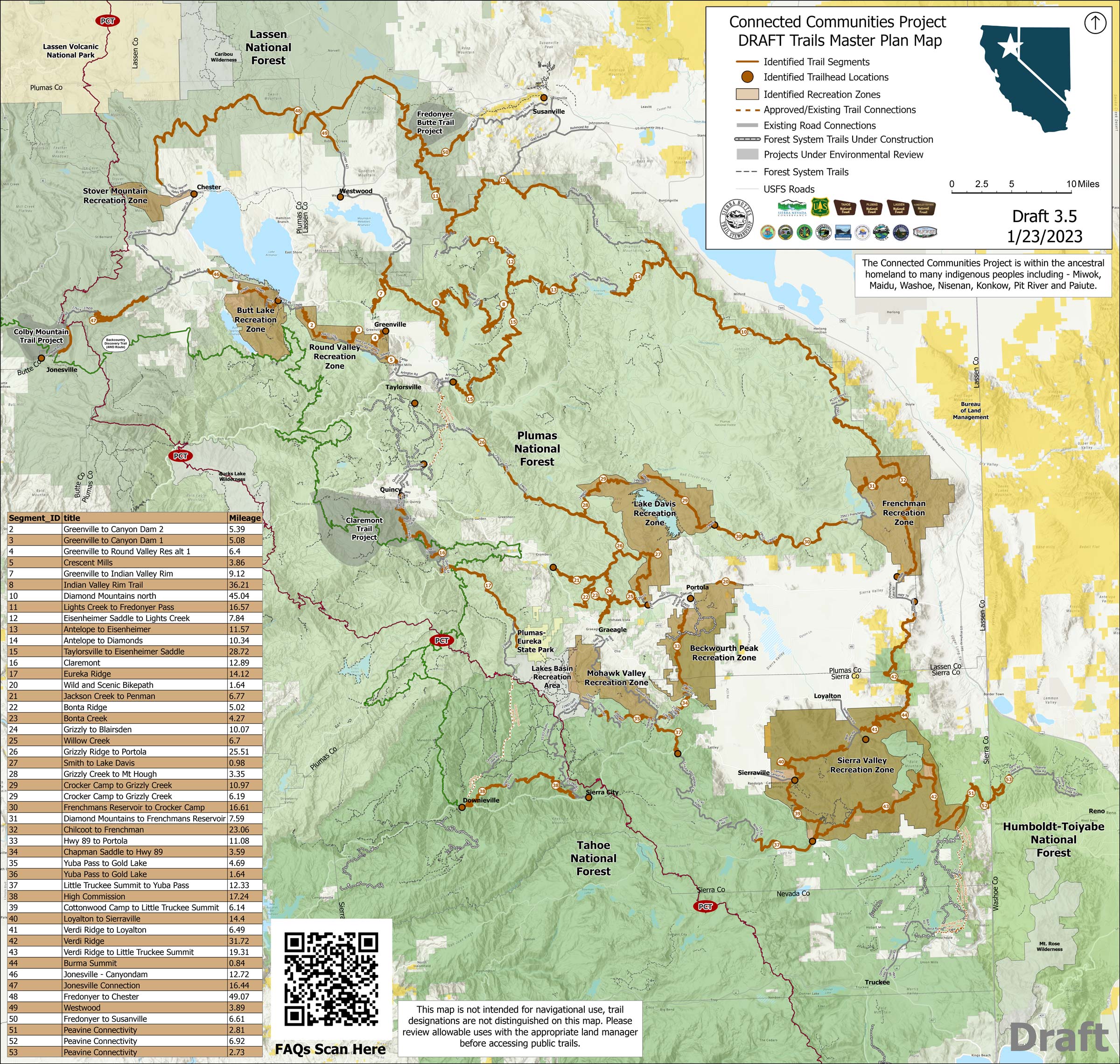
Planning — Trails Master Plan development (map)
Environmental Review — compliance with NEPA and CEQA to seek project approval
Construction — trail and capital improvement development projects
Maintenance — annual and long term maintenance
Economic Benefits
Recreation on public lands currently represents the greatest economic and cultural opportunity for our rural communities. In the United States, Outdoor Recreation is an $887 billion industry with Trail Sports accounting for $201 billion. Trails on public lands are proven to create local employment, attract visitors and new businesses, and improve the health and economy of mountain communities.
Recreation is an Economic Powerhouse! Click to enlarge.
Community Input
From September 2020 to March 2021, 1,351 people weighed in through surveys and more than 800 offered site ideas. Support is overwhelming:
98%
Say trails are important
94%
Want more trails near town
96%
Want town to town connections
88%
Are ready to volunteer
Since then, there have been 161 community meetings with 2,465 attendees, and online outreach reached about 742,515 people. The project has 73 letters of support from elected leaders and local governments.
Sierra Buttes Trail Stewardship conducted a multiyear public input tour and campaign in the Connected Communities footprint. Public comments in Appendix 9.
Land Manager Input
Spanning four National Forests, Bureau of Land Management lands, and six counties in two states, the plan sets shared standards for sustainable design, NEPA and CEQA compliance, and Optimum Location Reviews. At its heart is the Lost Sierra Route, a signature journey that connects landscapes, culture and communities while creating lasting economic, environmental and social benefits.
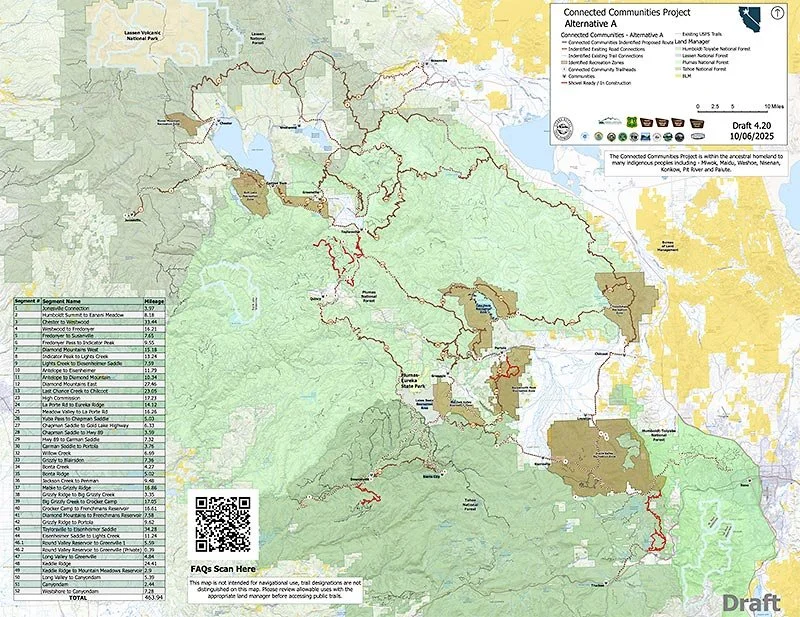
Connected Communities Project Maps, Appendix 1
The Recipe Book
Through the planning process, SBTS has also developed a set of Best Management Practices- essentially a “Recipe Book” that can be shared with communities and land managers across the globe to streamline project planning. These practices are rooted in the lessons, case studies and strategies detailed throughout the Connected Communities vision, and include:
Public Outreach
Surveys, community meetings and digital platforms engaged thousands of people, ensuring the plan reflects the values and priorities of both residents and visitors.Tribal Engagement
Partnerships with Indigenous tribes provided cultural resource surveys, traditional ecological knowledge and guidance on stewardship of ancestral lands.Public-Private Partnerships
Leveraging investments from agencies, nonprofits and the outdoor industry created new funding pathways and expanded project capacity.Optimum Location Reviews
Desktop review, GIS analysis and field assessments identified trail alignments that balance user experience with environmental sensitivity and long-term sustainability.
Graphic of Fire Hardened Trails Best Practice. In Appendix 7. Click to enlarge.
Environmental Planning
Full compliance with NEPA and CEQA processes set the stage for durable, legally defensible projects that protect natural and cultural resources.Conservation and Restoration Practices
Trail design incorporates habitat restoration, stream protection and erosion control to enhance ecosystem health alongside recreation.Fire Hardened Trails
Trails are built within shaded fuel breaks to reduce fire intensity, protect communities and improve access for firefighting and forest management.Maintenance and Construction Standards
Professional and volunteer crews apply proven methods in drainage, rock work and tread stabilization to ensure trails remain safe, resilient and enjoyable for generations.
Detailed Connected Communities Reports
📄 Connected Communities Vision
📄 Appendix 1: Connected Communities Maps
📄 Appendix 2: Trails Feasibility Study Maps
📄 Appendix 3: Community Survey Report
📄 Appendix 4: Connected-Communities Sustainable Trail Management Objectives
📄 Appendix 5: Fire-Hardened Trail (Vegetation Management Corridors Prescription)
📄 Appendix 6: Lost Sierra Community Histories
The Inspiration and Vision of Connected Communities
“Connected Communities stems from a desire to use trails as a tool to ensure economic stability in the Lost Sierra, a region whose communities have historically been subject to the boom and bust nature of resource extraction industries, causing locals to leave to seek employment in other areas. But the ultimate goal is for the Trails Master Plan to transcend this region, and become a model for communities around the country, and even globally, to develop their own economic empowerment and sustainable development.”
— Greg Williams
This is Our Moment
Let’s shape the future of our region by building trails that connect communities and keep our rural towns thriving.
Every dollar helps plan, build and maintain the trails that will define the next generation of adventure in Northern California and Western Nevada.
Donate. Volunteer. Join Us.
Your support makes it happen
Get the latest SBTS trail news and event information by signing up for our newsletter.
We promise not to spam you, we just want to pass on the building trails stoke and enjoying the Lost Sierra.
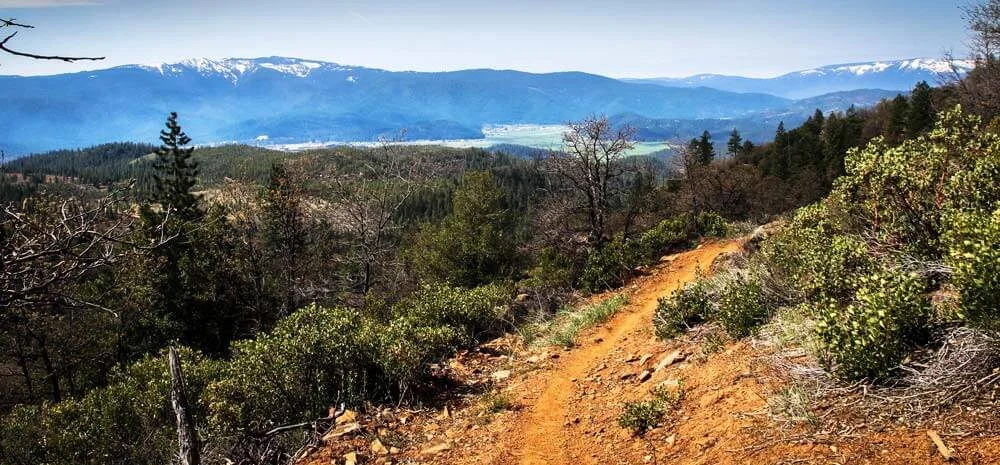
The Mt. Hough Trail, built by Sierra Buttes Trail Stewardship, in partnership with Plumas National Forest, navigates to the town of Quincy in the valley below.
Connected Communities Partner Acknowledgement
While this work would not be possible without the critical partnership from federal land managers and continued community-member support, financial backing is also critical to the project’s success. To date, the project has been primarily funded by Sierra Nevada Conservancy’s Resilient Sierra Nevada Communities and Vibrant Recreation and Tourism programs, but has also received financial support from Friesen Foundation, California Off-Highway Vehicle Division grants, Outdoor Industry partners, and matching funds brought by SBTS volunteers and donors.
The list of Connected Communities partners is extensive and varied, spanning from local elected officials to government agencies and municipalities including:
Sierra Nevada Conservancy
US Forest Service, Pacific Southwest Region 5
Tahoe National Forest
Lassen National Forest
Plumas National Forest
Plumas County Board of Supervisors
Sierra County Board of Supervisors
Lassen County Board of Supervisors
Butte County Board of Supervisors
City of Portola
City of Loyalton
City of Susanville
Recreation on public lands currently represents the greatest economic and cultural opportunity for our rural communities. In the United States, Outdoor Recreation is an $887 billion industry with Trail Sports accounting for $201 billion. Trails on public lands are proven to create local employment, attract visitors and new businesses, and improve the health and economy of mountain communities.
Congressional Representative Doug LaMalfa
California State Senator Brian Dahle
California State Assemblywoman Megan Dahle
California Department of Parks & recreation
Feather River Land Trust
Sierra County Land Trust
Lassen Land & Trails Trust
Truckee Donner Land Trust
Northern California Regional Land Trust
Friends of Plumas Wilderness
Feather River Tourism Association
Lake Almanor Area Chamber of Commerce
Lassen County Chamber of Commerce
Mountain Meadows Conservancy
Sierra Business Council
Plumas Corporation
Rotary- Portola, Quincy, Susanville, Indian Valley
Sierra County Visitors Bureau
Lost Sierra Chamber of Commerce
Center for Economic Development, Cal State Chico
State of Nevada, Off-Highway Vehicle Program
Pacific Crest Trail Association
Nevada County Woods Riders
Truckee Dirt Riders
Reno Area Dirt Riders
Chico Velo
Susanville Area Bicycle Association
Tahoe Area Mountain Bike Association
Truckee Trails Foundation
Santa Cruz Bicycles
Sierra Nevada Brewing Company
Patagonia
Dolan Auto GroupClif Bar
Shimano
Fox Shox
Wilderness Trail Bikes
Paul Component Engineering
Radius Outfitters
REI Co-op
Klean Kanteen
Voler
Camp Chef
International Mountain Bicycling Association